
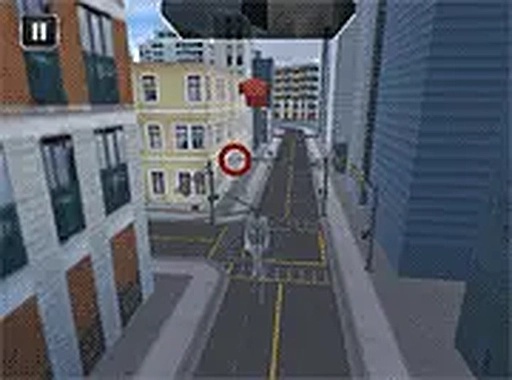
Helicopter Commander: Landing & Air Race
Helicopter Commander: Landing & Air Race offers two distinct challenges: set your helicopter down smoothly on a marked pad within a time limit, or thread through floating checkpoints at speed. Completing stages earns credits for unlocking aircraft with different handling traits.
Reviews
About this game
Two Modes, Two Skill Sets
Helicopter Commander: Landing & Air Race separates its challenge into two modes that demand different piloting habits. In the landing mode, a designated pad appears somewhere on the map, and your job is to reach it and bring the aircraft to a complete stop before the timer runs out. The race mode flips the priority: instead of a gentle touchdown, you chase speed and agility by flying through a sequence of floating markers. Neither mode is a reskin of the other, so progress in one does not automatically transfer to the other.
How the Controls Shape Your Approach
Altitude, heading, and forward speed are the three variables you constantly manage, and the game responds to keyboard input or mouse movement. Small adjustments matter more than large ones. Landing punishes heavy-handed input: come in too fast or too steep and you will bounce or overshoot the pad. Racing rewards momentum, but only if you can hold a clean line around each checkpoint. After every attempt, the game shows your time and accuracy, so you can see exactly where a run fell apart.
Credits, Unlockable Helicopters, and Replay
Finishing stages pays credits, which you spend in the in-game shop on helicopters with different handling characteristics. Some aircraft lean toward stability, which suits the landing tasks; others favor speed for the race mode. That creates a practical reason to replay earlier stages: you are not just chasing a better time, you are funding a hangar that lets you attack the same layout with a different machine. Difficulty rises gradually, so the early stages serve as a low-pressure place to learn the basics before layouts and obstacles grow more demanding.
Desktop-First Design and Short Sessions
The game is built for desktop computers and assumes keyboard and mouse input, which is why the interface stays minimal and out of the way. Runs last only a few minutes, so it fits short breaks as easily as longer practice blocks. There is no lengthy tutorial gate; you can start flying almost immediately, though the later stages will ask for patience and repeated attempts before they click.
Why Repetition Is the Point
Each stage has a fixed layout, which means memorization is a legitimate tool. Learning where the landing pad sits, or which line through the checkpoints costs the least time, is how you shave seconds and clean up your touchdowns. The game treats persistence and observation as skills in their own right, so a successful run feels earned rather than lucky.







Comments
0 comments