
Homemade Flying Machine Course
In this arcade game, players assemble flying vehicles from everyday objects like bottles and wheels, then pilot them through indoor obstacle courses. Quick sessions and creative building define the experience.
Reviews
About this game
Assembly and Flight Basics
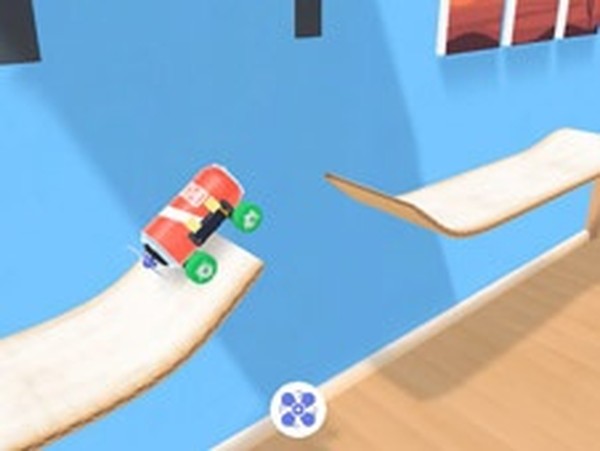
Players start by selecting from a set of provided parts, such as a plastic bottle, two wheels, and a small propeller. These components snap together to form a simple flying car. Once built, the vehicle must be guided through a series of indoor courses. The primary controls involve activating the propeller to generate lift and forward motion. Balancing speed and altitude is essential to avoid obstacles and reach the finish line. The game uses intuitive touch controls on mobile devices, making it easy to pick up and play.
Obstacle Course Design
Each course is set inside a house, with rooms and hallways transformed into challenging paths. Players encounter furniture, toys, and other household items that act as barriers. Some obstacles require flying over, while others need careful maneuvering around. The layout changes with each level, introducing new arrangements and tighter spaces. This design keeps the gameplay fresh and encourages players to adapt their strategies. The 3D graphics give these indoor environments a lively, playful feel.
Creative Vehicle Combinations
As players progress, they unlock new building materials. Later levels may allow constructing vehicles from items like a banana with wheels or a rocket attachment. Experimenting with different combinations is a core part of the experience. Some setups provide better stability, while others offer more speed or lift. Players learn to match their vehicle design to the specific demands of each course. This trial-and-error process rewards creativity and problem-solving.
Skill Development and Progression
The game naturally builds several skills. Hand-eye coordination improves as players steer their vehicle through narrow passages. Quick reflexes help in reacting to sudden obstacles. Spatial awareness is tested when navigating three-dimensional courses. The hypercasual format means each attempt is short, allowing for repeated practice without frustration. Over time, players become more consistent at completing courses and can attempt more complex designs. The sense of accomplishment comes from mastering both the building and flying aspects.
Visual and Audio Presentation
The 3D graphics are colorful and cartoonish, matching the lighthearted tone. Objects have a toy-like appearance, and the indoor settings are bright and inviting. Sound effects include the hum of the propeller and a cheerful jingle when completing a course. The audio feedback helps players gauge their speed and altitude. The overall presentation is polished but simple, focusing on clarity and fun rather than realism. This approach suits the quick-play nature of the game.
Session Structure and Accessibility
Each game session typically lasts a few minutes, making it ideal for short breaks. There is no complex story or lengthy tutorial; players can start building and flying immediately. The difficulty curve is gentle, with early courses being straightforward and later ones introducing more obstacles. The game is designed for both mobile phones and tablets, with responsive touch controls. No special equipment is needed, and the game can be played anywhere. This accessibility broadens its appeal to casual gamers of all ages.





Comments
0 comments