
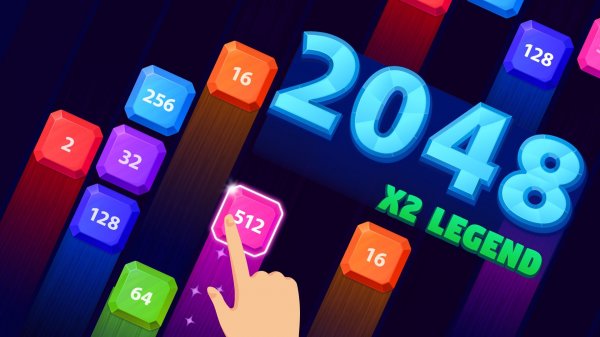
Number Merge Shoot Puzzle
Number Merge Shoot Puzzle replaces sliding with aiming: launch numbered blocks onto a grid and merge matching values to keep the board clear. Limited space and finite boosters make each placement a decision, while the absence of timers lets you plan at your own pace.
Reviews
About this game
Aiming Instead of Sliding
Number Merge Shoot Puzzle swaps the usual drag-and-drop approach for a launcher positioned at the bottom of the screen. Each block is sent upward toward a grid, and the challenge is landing it beside a block with the same number. When two matching values touch, they combine into a single block with a higher number—two 4s become an 8, for example. Because the block travels before it lands, placement depends on precision and timing rather than simple swapping.
Every Placement Has a Cost
Grid space is finite, so a careless shot can block future merges. Merging early keeps the board organized and creates room for new blocks; letting values pile up without matching them leads to a crowded grid. When no merges remain possible, the session ends. That constraint pushes players toward planning several moves ahead instead of firing blocks at random.
Boosters as a Limited Resource
When the board becomes difficult to manage, boosters offer an exit. They can remove a troublesome block or rearrange the layout slightly, which can turn a nearly full grid back into a workable one. Boosters are limited, though, so deciding when to spend one matters as much as deciding where to aim. Using them too early wastes the advantage; using them too late may not save the board.
Designed for Unhurried Thinking
There are no timers and no pressure to act quickly, so each shot can be planned for as long as needed. Clean, colorful graphics keep numbers legible and blocks visually distinct. The simple controls let new players start immediately, while the growing difficulty of managing a filling grid keeps experienced puzzle players engaged. The relaxed pace suits anyone who enjoys logical challenges over reflex-based ones.








Comments
0 comments